
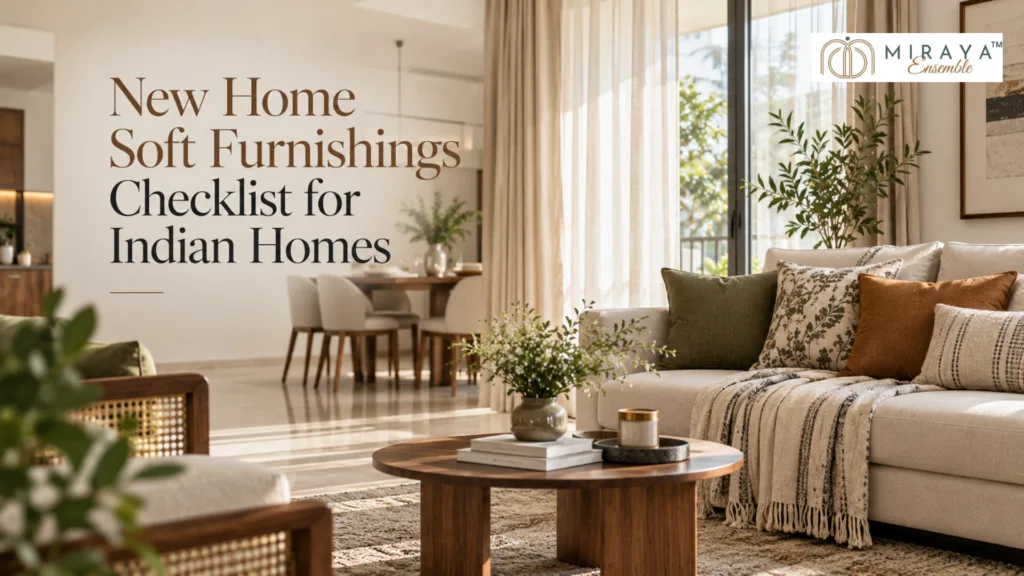
Start with how you want your new home to feel
When you begin furnishing a new home, it is easy to think about each room or product separately. A more thoughtful approach starts with how you want the home to feel and function as a whole. This new home soft furnishings checklist works room by room, resolving practical layers before decorative ones. When curtains, upholstery and bedroom textiles are selected without considering light, proportion and daily use, a home may look complete but still lack the calm and cohesion that make it comfortable over time.
Think of this checklist as a sequence rather than a shopping list. Start with the elements that affect privacy, sleep and daily use; then add character. In Indian homes, strong sunlight, dust, humidity and compact layouts also influence material and treatment choices. The right sequence allows each layer to respond to the space, function and aesthetic of the home, while identifying where customisation adds meaningful value.
Begin with how you want the living room to come together
The living room often sets the tone for the rest of your home, so it helps to shape it in stages. Begin with the window treatment because it shapes light, privacy and proportion. Sheers suit rooms where daylight is welcome but privacy is needed; lined curtains or blinds can offer greater control against harsh afternoon sun. Final measurements should follow once the furniture layout and track position are confirmed.
Next, assess the main seating. If the sofa is already upholstered, use its scale and texture as an anchor rather than matching every fabric to it. A correctly sized rug should connect the seating group, while cushions can be introduced later through considered shifts in texture, colour and pattern.
For most living rooms, the first phase is simple: window treatments, primary upholstery and a correctly sized rug. Decorative layers can follow once the room’s furnishing language is established.
Let comfort lead the bedroom
In the bedroom, begin with what will make the space feel comfortable, private and restful. Before choosing decorative cushions or a statement bedcover, resolve the practical requirements. Blackout lining can be valuable where streetlights or early sun disturb sleep, while the face fabric can remain soft and refined.
The bed often requires fewer layers than showroom styling suggests. A fitted sheet, breathable duvet or quilt, supportive pillows and a coverlet are usually enough. Cotton and linen-rich fabrics suit warmer climates, while washable blends can be practical for children’s rooms or frequent guests. Upholstered headboards should also be selected with maintenance in mind.
Prioritise the main bedroom first, followed by children’s and guest rooms. Guest-room furnishings can remain neutral and versatile; they should be easy to maintain rather than overly personalised.
Let everyday life guide dining spaces and home offices
Dining-chair upholstery faces spills, friction and regular cleaning, so durability matters. Mid-tone, tightly woven fabrics often age more gracefully than very pale or loose weaves. In an open-plan home, a colour or texture from the living room can be echoed without repeating the same fabric everywhere.
A home office needs controlled daylight rather than darkness. Roller, Roman or Venetian blinds can reduce screen glare while preserving natural light. If the room doubles as a guest room, a practical blind can be paired with curtains, while a rug or textile surface may help soften acoustics.
Choose practicality where it matters most
Kitchen furnishings should tolerate moisture, grease and regular cleaning. Long curtains beside a worktop or hob are rarely practical; a compact, easy-to-maintain blind is generally more appropriate. Breakfast-nook upholstery should use sturdy fabrics with removable or cleanable covers.
Bathrooms require privacy, moisture resistance and quick drying. Avoid untreated natural fabrics in areas exposed to steam or splashes. Choose a fitted blind or another moisture-resistant treatment, and keep decorative textiles washable. In kitchens and bathrooms, practicality is what allows the space to remain refined through everyday use.
Add the finishing layers once your home begins to find its rhythm
Throws, cushions and runners feel most considered when they reflect the way you live. If you often host family and friends, easy-to-maintain fabrics can make everyday living more relaxed; a quiet reading corner, on the other hand, may need little more than one beautifully chosen throw.
Before making your final selections, step back and look at the home as a whole. Check that curtain lengths relate to one another, colours move naturally between rooms and every fabric has a clear purpose. Cohesion does not require repetition; each room can retain its own character while belonging to the same home.
Frequently Asked Questions
Start with curtains or blinds, essential bedroom textiles and the main upholstery because these affect privacy, sleep and daily comfort. Rugs, cushions and decorative layers can be added later.
No. A consistent palette can connect the home, but each room may need a different weight, lining or construction based on sunlight, privacy and maintenance.
Not always. Customisation is most valuable where fit and performance matter, such as window treatments, unusual furniture sizes and statement upholstery. Ready-made pieces can work well for replaceable accents.
Final Thoughts
A new home begins to feel complete when each layer reflects the way you live, rather than simply filling the space. Planning soft furnishings room by room, and in the right sequence, helps avoid unnecessary purchases and creates thoughtful soft furnishings that feel settled rather than rushed.
At Miraya Ensemble, soft furnishing consultation is the first step in bringing these decisions together—considering fabric, function, proportion and the way each room will be lived in before individual products are selected. The result is a home that feels connected, comfortable and considered.
Meaningful luxury is not about adding more. It is about making every choice count—intention over excess, timeless over trend and composition over product. Inspired by you. Created in luxury.