
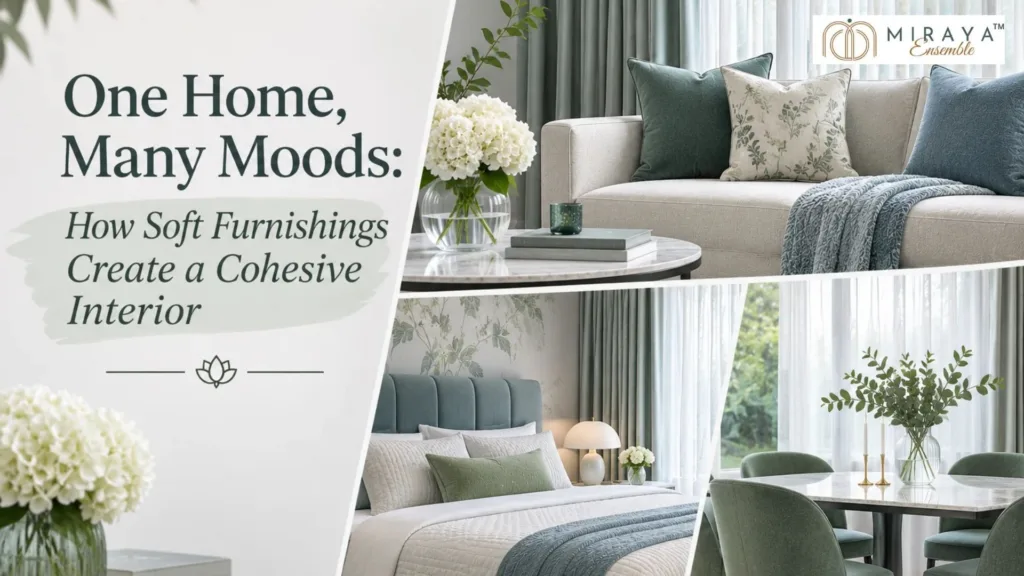
A room-by-room guide to using curtains, upholstery, colour and texture to give each space its own atmosphere without losing the feeling of home.
Every room holds a different kind of moment. The living room invites conversation; the bedroom offers rest; a reading corner makes space for quiet. It follows that each room can have a distinct mood without looking as though it belongs to a different home.
Soft furnishings make that balance possible. The weight of a curtain, the texture of upholstery, the colour of a cushion or the softness of a rug can change how a space feels. The key is to design for the experience of each room while carrying a few thoughtful connections throughout the home.
What Creates the Mood of a Room?
A room’s atmosphere is shaped by light, colour, texture, proportion and everyday use. Fabrics influence each of these. Sheer curtains diffuse daylight; deeper upholstery tones create intimacy; woven textures introduce warmth; and rugs help define where people gather.
Rather than starting with matching products, ask how you want the room to feel. Calm and restorative? Warm and sociable? Focused and uncluttered? That answer can guide the textile palette.
Living Room Soft Furnishings: Warmth and Welcome
A living room often needs to adapt throughout the day, from bright mornings to relaxed evenings. Layered sheers and curtains offer flexibility with light and privacy. A generously proportioned rug can anchor the seating, while cushions introduce a considered mix of textures.
If the sofa has a strong pattern or colour, allow it to lead. Choose quieter curtains and a restrained rug. If the furniture is neutral, introduce character through a tactile weave, subtle pattern or contrasting cushion fabric. The aim is warmth without visual clutter.
Bedroom Soft Furnishings: Calm and Comfort
In a bedroom, comfort comes before decoration. Consider breathable bedding, a tactile upholstered headboard and curtains that provide privacy and appropriate light control. Blackout lining can be useful where morning sun or streetlights affect sleep, while the visible curtain fabric remains soft and elegant.
A calm room does not need endless layers. A well-chosen coverlet, supportive pillows and one or two accents may be enough. A quieter palette can feel restful, but rich tones can be equally soothing when the textures and lighting are balanced.
Dining Room Textiles: Ease and Subtle Character
Dining areas should feel inviting and effortless to use. Upholstered dining chairs bring comfort, but their fabrics must suit regular wear and cleaning. A table runner or carefully chosen window treatment can add softness without complicating the space.
For an open-plan dining and living area, repeat an undertone or material quality rather than using identical fabrics. A warm woven texture in the living room might reappear in the dining chairs, creating a connection that feels natural.
Home Office and Reading Nook: Focus and Quiet
Spaces for work and reading benefit from measured restraint. A Roman or roller blind can help manage screen glare; a rug or upholstered chair can soften a room with hard surfaces. In a reading corner, a comfortable chair, a throw and gently filtered light may be all that is needed.
Choose furnishings according to when the space is used. Afternoon light may call for different window treatments from a room used primarily in the evening. Functional decisions are part of the atmosphere, not separate from it.
How to Make Different Rooms Feel Connected
Cohesion is not the same as repetition. A home can move from an expressive living room to a peaceful bedroom while retaining a shared design language. Three approaches are especially effective:
- Repeat an undertone: carry a warm beige, muted olive or soft charcoal through different materials without matching every colour exactly.
- Vary texture within a family: pair a fine sheer with a textured upholstery weave or a matte rug so rooms feel related but not identical.
- Maintain a consistent level of detail: thoughtful curtain proportions, tailored finishes and considered fabric scale create continuity across rooms.
Look at transitions between rooms, especially through open doorways and shared spaces. A small echo of colour or texture can be enough to connect two very different moods.
A Simple Room-by-Room Styling Method
1. Define the feeling
Write down two or three words for each room, such as restful, airy, sociable or focused.
2. Resolve the functional needs
Consider sunlight, privacy, durability, maintenance and how the space is used every day.
3. Choose the anchor textile
Start with the most influential element: curtains, primary upholstery or a rug, depending on the room.
4. Build a connected palette
Use shared undertones or related textures while allowing individual rooms to express their own character.
5. Edit the finishing layers
Add cushions, throws and smaller textiles only where they improve comfort or composition.
Common Mistakes That Disrupt a Cohesive Home
Matching every fabric
Identical curtains and cushions across rooms can make the interior feel predictable. Seek relationships, not duplicates.
Choosing appearance over performance
Delicate upholstery may be unsuitable for heavily used dining chairs; window treatments should also respond to glare and privacy.
Adding too many accents
Too many competing colours, patterns and textures can weaken the mood you are trying to create.
Ignoring natural light
The same fabric can look different in a bright living room and a shaded bedroom. Review samples in the actual spaces.
Considerations for Indian Homes
Strong sunlight, dust, seasonal humidity and compact layouts make practical fabric choices especially important. Lining and layered window treatments can help manage light; easy-care upholstery suits busy family spaces; and careful curtain stacking can protect usable window area in smaller rooms.
A cohesive home should feel comfortable in everyday life, not only in photographs. Choose materials and finishes with the room’s climate, use and maintenance needs in mind.
Frequently Asked Questions
No. A shared undertone, texture or design sensibility can connect rooms without making them identical.
Start with curtains, cushions, rugs and throws. Changes in texture, colour and filtered light can alter the atmosphere around existing furniture.
Begin with the window treatments and primary upholstery that affect light, privacy, comfort and proportion. Add smaller decorative layers later.
Repeat a subtle colour, weave or material quality between zones, while using rugs and upholstery to define each area.
Yes. Use carefully chosen textures and restrained palettes to create contrast without overwhelming the space.
Final Thoughts: Different Moods, One Considered Home
A meaningful home makes room for the many ways you live. Some spaces can be lively, others quiet; some expressive, others beautifully understated. Thoughtful soft furnishings allow these moods to coexist while giving the home a sense of continuity.
At Miraya Ensemble, the starting point is the people who live in the space and the moments they want it to hold. Fabric, light, proportion and everyday function are considered together, creating interiors that feel personal, varied and connected.
Inspired by you. Created in luxury.
Explore Soft Furnishing Consultation
Whether you are refining one room or bringing an entire home together, a considered approach to fabrics and window treatments can help create the atmosphere you envision.
Explore Miraya Ensemble’s furnishing styles
Read the guide to choosing curtains and blinds for every room